
Discerning the variances between the SAT and ACT is crucial for any student preparing for college admissions. The SAT is known for its focus on reasoning and critical thinking, while the ACT tests a student’s knowledge in English, math, science, and reading. Understanding these key differences can help a student determine which exam to take based on their strengths and weaknesses. In this blog post, we will delve into the specific disparities between the two exams and provide strategies for effectively preparing for each. Whether he is more suited to the SAT or the ACT, this post will equip him with the necessary information to excel on his chosen exam.
Contents
Key Takeaways:
- Format: The SAT is a longer test, with a focus on evidence-based reading and writing, and includes an optional essay, while the ACT includes a science section and has a broader range of subjects.
- Preparation: Tailor your preparation for each test by taking practice exams that mimic the format and timing of each test. Understand the type of questions and the skills required for each test.
- Time Management: The SAT allows more time per question compared to the ACT, so pacing yourself is crucial based on the test you take, and being able to manage your time accordingly will be beneficial.
- Subject strengths: The SAT emphasizes vocabulary, while the ACT emphasizes grammar rules and science reasoning. Highlight your strengths and weaknesses in each subject area and focus on improving where needed.
- Test-taking strategies: Familiarize yourself with the types of questions and strategies needed for each test, whether it’s the process of elimination, educated guessing, or how to approach the essay section (if applicable).
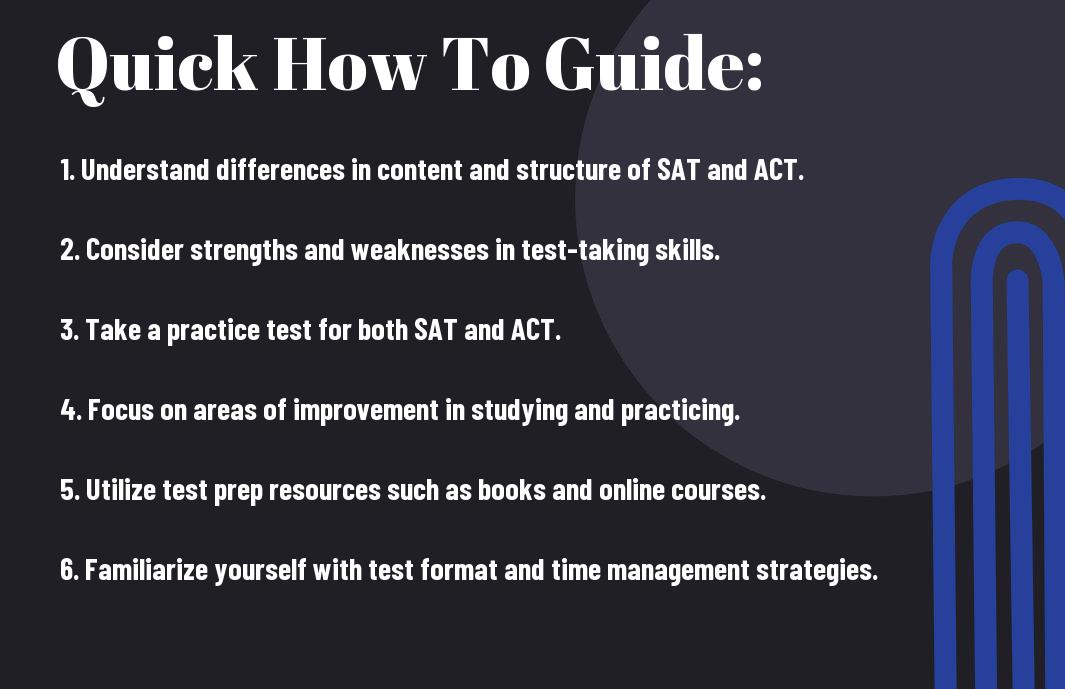
Key Differences Between the SAT and ACT
Clearly, the SAT and ACT are two of the most widely used standardized tests for college admissions in the United States. While both tests measure a student’s readiness for college and serve as a key component of the admissions process, there are some significant differences between the two exams. Understanding these differences is crucial for students as they prepare to take either test.
Test Structure and Timing
The SAT consists of four sections: Reading, Writing and Language, Math (with calculator), and Math (without calculator), along with an optional essay. On the other hand, the ACT includes sections on English, Math, Reading, Science, and an optional writing test. The SAT gives a total testing time of 3 hours (plus 50 minutes for the essay), and the ACT has a total testing time of 2 hours and 55 minutes (plus 40 minutes for the writing test). It is important for students to consider their strengths and weaknesses in each of these subjects when deciding which test to take.
Subject Matter and Question Types
When it comes to subject matter, the SAT places a heavier emphasis on evidence-based reading and writing, while the ACT focuses more on grammar and punctuation. Additionally, the SAT math section contains questions grounded in real-world scenarios, while the ACT math section covers a broader range of mathematical topics. The ACT also includes a dedicated science section, which the SAT does not. Perceiving the differences in question types and subject matter is essential for students to determine which test aligns best with their strengths and preferences.
- Evidence-based reading and writing
- Grammar and punctuation
- Real-world math scenarios
- Mathematical topics
- Dedicated science section
Scoring Methods and Interpretation
The most important difference between the SAT and ACT scoring is that the SAT has a composite score out of 1600 (based on the combined scores of the Math and Evidence-Based Reading and Writing sections), while the ACT has a composite score out of 36 (averaging the scores of the four mandatory sections). Knowing how the scores are calculated and interpreted is crucial for students as they decide which test to focus their preparation efforts on.
How to Prepare for the SAT
To prepare effectively for the SAT, one should follow a structured study plan and utilize various resources to maximize their potential for success. Here are some essential strategies to consider when preparing for the SAT.
Essential Study Tips and Resources
When preparing for the SAT, it is crucial to utilize a variety of study resources such as prep books, online practice tests, and study groups. It is also important to prioritize subjects or areas that may need more improvement and dedicate ample time to review and practice. Creating a study schedule and sticking to it can help students stay on track and make the most of their study time. Additionally, seeking guidance from professional tutors or educators can provide valuable insights and strategies for success. Lastly, taking advantage of official practice materials from the College Board is highly recommended. Through consistent practice and the use of reliable study aids, individuals can build their confidence and increase their chances of excelling on the SAT.
Practice Strategies and Time Management
In addition to studying the material, a crucial aspect of SAT preparation is developing effective practice strategies and time management skills. Students should familiarize themselves with the format of the test and practice answering questions within the allocated time limits. Time management is a critical factor in achieving a high score on the SAT, and individuals should practice pacing themselves to ensure they are able to complete each section within the given time frame. Moreover, utilizing various test-taking strategies such as skipping difficult questions and returning to them later can be beneficial in optimizing overall performance.
Factors to Consider for Test Day Success
On the day of the SAT, it is important for test-takers to consider several key factors that can contribute to their success. Getting a good night’s sleep and eating a nutritious breakfast can help one feel alert and focused during the exam. It is also essential to arrive at the test center early and make sure to bring all the necessary materials, including an approved calculator and identification. Having a positive mindset and staying calm under pressure are also important aspects to consider for test day success. Perceiving the SAT as an opportunity to showcase one’s skills and knowledge can help reduce anxiety and improve performance.
How to Prepare for the ACT
Your preparation for the ACT should be comprehensive and focused on the unique challenges that this test presents. By understanding the key differences from the SAT and tailoring your approach accordingly, you can maximize your chances of success. Here are some key tips to help you prepare effectively for the ACT.
Comprehensive Preparation Techniques
When preparing for the ACT, it’s important to cover all the subjects that will be tested, including English, math, reading, and science. Using a variety of study materials such as prep books, online resources, and practice tests can help students become familiar with the test format and improve their confidence. Devoting enough time to study for each section of the ACT is crucial for achieving a high score.
Adapting to the ACT’s Unique Challenges
The ACT has a faster pace compared to the SAT, which can be challenging for some students. It’s important to practice time management and test-taking strategies to ensure that he or she can complete each section within the given time limit. Additionally, the ACT includes a science section, so students should be familiar with interpreting data and understanding scientific concepts to excel in this area. Adapting to the specific content and format of the ACT is essential for success.
Critical Review and Practice Test Advice
Reviewing and analyzing his or her performance on practice tests can help students identify their strengths and weaknesses, and tailor his or her study plan accordingly. Taking multiple full-length practice tests under timed conditions is crucial for building endurance and confidence. It allows students to become familiar with the test format, and the types of questions they will encounter on test day. It also helps students develop effective strategies to tackle different question types and manage their time effectively during the test.
Making the Choice and Planning Your Prep
After deciding to take either the SAT or ACT, a test taker should consider several factors when choosing between the two standardized tests. It is crucial to plan and prepare for the chosen exam strategically to achieve the best possible score.
Factors to Consider When Choosing Between SAT and ACT
When deciding between the SAT and ACT, test takers should consider their strengths and weaknesses in various subject areas, time management skills, test-taking preferences, and the specific requirements of the colleges or universities they plan to apply to. A few key considerations include the fact that the SAT has a no-calculator math section, while the ACT has a science section. They should also consider their college major or career path, as some colleges prefer or require one test over the other. Thorough research and self-assessment are essential before deciding which test to take.
Creating a Customized Study Plan
Creating a customized study plan is crucial for efficiently preparing for the SAT or ACT. Test takers should start by taking a practice test to assess their initial performance and identify areas for improvement. They should then establish a realistic study schedule, focusing on their weaknesses while maintaining their strengths, and utilizing a variety of study materials such as test prep books, online resources, and tutoring. Regular practice tests and review sessions are crucial for tracking progress and staying on track with their study plan.
Tips for Maintaining Motivation and Managing Stress
Preparing for the SAT or ACT can be stressful, but there are strategies to help test takers stay motivated and manage stress effectively. Establishing a routine, setting small, achievable goals, and rewarding oneself for milestones reached are effective ways to maintain motivation. Additionally, implementing stress-management techniques such as regular exercise, adequate sleep, and mindfulness practices can help test takers stay calm and focused. Perceiving the exam as an opportunity to showcase their abilities and potential rather than a source of pressure can also help them approach the test with a positive mindset.
Conclusion
From above, it is clear that while the SAT and ACT are both standardized tests for college admissions, there are significant differences between the two. It is important for students to understand these differences and choose the test that best suits their skills and strengths. Preparation for each test will also vary, with the ACT placing a heavier emphasis on time management and the SAT focusing more on critical thinking and data analysis. Students should take practice tests for both exams to determine which test they are more comfortable with, and then tailor their preparation accordingly. By understanding the key differences between the SAT and ACT and preparing strategically, he or she can maximize his or her chances for success on test day.
FAQ
Q: What are the key differences between the SAT and ACT?
A: The SAT and ACT are both standardized tests used for college admissions in the United States. The SAT focuses more on testing students’ reasoning and critical thinking skills, while the ACT includes a science section and focuses more on testing students’ knowledge in different subjects. Additionally, the SAT has a stronger emphasis on vocabulary, while the ACT has a slightly more predictable structure and a faster pace.
Q: How should I prepare for the SAT?
A: To prepare for the SAT, it is important to familiarize yourself with the test format and content. Practice tests and review materials are widely available and can be helpful in understanding the types of questions that will be asked. Additionally, consider enrolling in a test preparation course or working with a tutor to help identify areas of weakness and develop strategies for improvement. Time management and practice essays are also important components of SAT preparation.
Q: How should I prepare for the ACT?
A: When preparing for the ACT, it is beneficial to take practice tests and review materials to become familiar with the test format and content. Because the ACT includes a science section, it is important to review scientific concepts and data interpretation. Similar to the SAT, consider enrolling in a test preparation course or working with a tutor to identify areas of weakness and develop strategies for improvement. Time management and practice with the fast-paced nature of the ACT are also crucial components of ACT preparation.