
Embarking on the journey to prepare for the SAT can be a daunting task, but with the right approach, he can effectively conquer it. The key to success lies in a strategic study plan that incorporates regular practice, targeted review, and proper time management. They should begin by familiarizing themselves with the structure and content of the test, then proceed to identify their strengths and weaknesses. From there, they can craft a personalized study schedule, dedicating ample time to consistently practice and review challenging topics. Additionally, they should utilize available resources such as practice tests, study guides, and tutoring services to supplement their preparation. By adopting a proactive and disciplined approach, he can effectively study for the SAT and achieve his desired score.
Contents
Key Takeaways:
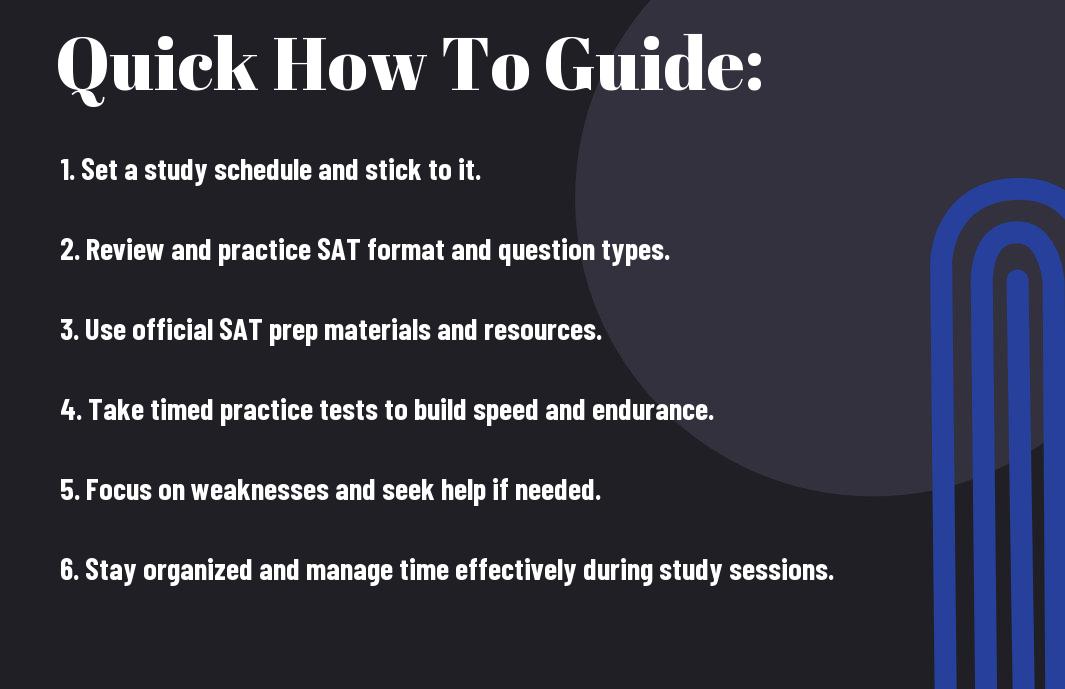
- Set a study schedule: Creating a consistent study schedule will help you stay focused and organize your study plans effectively.
- Use official SAT study materials: Utilizing official study materials will ensure that you are practicing with the most relevant test content and questions.
- Focus on your weaknesses: Identify your weak areas and allocate more study time to improve on those specific topics.
- Take practice tests: Regularly taking full-length practice tests will help you familiarize yourself with the test format and time constraints, as well as identify areas for improvement.
- Stay consistent and motivated: Maintaining a positive mindset and staying consistent with your study routine will ultimately lead to better results on the SAT.
Understanding the SAT
Even though the SAT is a familiar term for high school students, understanding the exam and its components is crucial for effective preparation. The SAT is a standardized test widely used for college admissions in the United States. It aims to assess a student’s readiness for college and provides colleges with a common data point for comparing all applicants. Understanding the SAT structure and scoring system is essential for devising an effective study plan.
Structure of the SAT
The SAT consists of three main sections: Reading, Writing and Language, and Math, with an optional Essay. The Reading section assesses the ability to understand and analyze written passages. The Writing and Language section evaluates grammar and language usage. The Math section tests the ability to solve problems and interpret data. The optional Essay measures reading, analysis, and writing skills. The exam is administered in both digital and paper formats. Each section has a specific time limit, and understanding the format and timing is crucial for effective time management during the test.
Scoring System and Benchmarks
The SAT is scored on a scale of 400-1600, combining test results from the Reading, Writing and Language, and Math sections. The optional Essay is scored separately. Each section is scored on a scale of 200-800. The scoring system includes raw scores, which are converted to scaled scores, and a total score. Additionally, the SAT provides percentile ranks, indicating the percentage of test-takers that a student scored higher than. Understanding the scoring system and benchmarks is essential for setting realistic score goals and tracking progress during the preparation process.
Essential Study Tips
Despite the importance of studying for the SAT, many students struggle with finding an effective study method. To help maximize study efforts, here are some essential study tips:
- Creating a study plan: Organizing study materials and setting a study schedule is crucial for staying on track and covering all necessary topics.
- Time management strategies: Efficiently allocating time for each section of the SAT and avoiding procrastination is key to effective studying.
- Choosing the right study materials: Selecting high-quality, reliable study materials is important for a comprehensive understanding of the test content.
- Utilizing practice tests: Regularly practicing with official SAT practice tests helps familiarize oneself with the test format and enhances test-taking skills.
Assume that by implementing these study tips, one can significantly improve their SAT preparation and performance.
Creating an Effective Study Plan
When preparing for the SAT, creating a comprehensive study plan is essential. This includes organizing study materials, setting achievable goals, and creating a study schedule. By doing so, one can effectively cover all test topics and ensure thorough preparation.
Time Management Strategies
Effective time management is crucial for SAT preparation. Students should allocate dedicated time for each section of the test and avoid procrastination. By utilizing time management strategies, they can optimize their study sessions and ensure thorough coverage of all test material.
Choosing the Right Study Materials
Choosing the right study materials is critical for a successful SAT preparation. Students should select high-quality, reliable study resources such as official SAT prep books, online practice tests, and reputable study guides. This ensures a comprehensive understanding of the test content.
Utilizing Practice Tests
Regular practice with official SAT practice tests is essential for test readiness. By simulating test conditions and practicing with timed tests, students can familiarize themselves with the test format and improve their test-taking skills. This ultimately enhances their overall performance on the SAT.
Critical Study Factors
Unlike regular high school exams, the SAT requires a different set of tactics and critical study factors to succeed. Some of the key factors to consider when studying for the SAT include:
- Time management skills – He needs to be able to pace himself effectively in completing the test within the time limit.
- Understanding of test format – She should familiarize herself with the SAT format and question types to know what to expect on test day.
- Effective test-taking strategies – They must know how to approach different question types strategically to maximize his scores.
Perceiving and addressing these critical factors is essential for a successful SAT study plan.
Identifying Your Weaknesses
It’s crucial for test-takers to identify their weaknesses early on in their SAT prep. Whether it’s difficulty with specific question types or time management, understanding where they struggle can help them tailor their study plan to focus on improving these areas.
The Role of Consistency in Preparation
Consistency is key when it comes to SAT preparation. It’s important for students to create a study schedule and stick to it to ensure they cover all the necessary material and are adequately prepared for the exam.
Stress Management and Mental Preparation
Managing stress and preparing mentally for the SAT is just as important as mastering the content. Test-takers should practice relaxation techniques and positive visualization to alleviate test anxiety and improve their performance.
The Impact of Diet and Sleep on Performance
Both diet and sleep play a significant role in a student’s cognitive function and overall performance. Eating healthy and getting enough sleep are crucial for maximizing one’s ability to focus and retain information while studying for the SAT.
Test Day Strategies
Keep calm and focused on test day by following these essential strategies for success on the SAT.
Tips for the Night Before the Test
It’s crucial for students to adequately prepare mentally and physically for the SAT exam the night before. They should review their notes and practice questions, but also take time to relax and unwind. Eating a healthy dinner, getting a good night’s sleep, and setting out all necessary materials are important steps to take before the big day. Ultimately, students should try to stay positive and avoid any negative thoughts or stress-inducing activities before the test. Perceiving the exam as an opportunity rather than a burden is key to maintaining a clear mind and steady nerves.
How-to Approach Each Section
For each section of the SAT, students should have a strategy in place to tackle the questions efficiently. Whether it’s skimming the reading passages, tackling the writing and language section systematically, or using process of elimination on the math questions, having a plan in mind can save valuable time and reduce anxiety. Students should avoid getting stuck on difficult questions—flag them and return if time allows. Approaching each section with a clear, organized plan of attack can help test-takers feel more confident and in control.
Time Management During the Exam
One of the most crucial elements of SAT success is time management during the exam. Students must pace themselves to ensure they have enough time to answer each question and review their work. They should prioritize questions based on their strengths and weaknesses and avoid spending too much time on any one question. It’s also essential to keep an eye on the clock and make adjustments as necessary to stay on track.
Conclusion
Hence, in order to effectively study for the SAT, one must make a solid study plan and stick to it. By utilizing resources like practice tests, review books, and tutoring services, they can ensure they are fully prepared for the exam. Additionally, he should focus on improving their weaknesses and building upon their strengths through consistent practice and learning. Most importantly, they should manage their time wisely and stay committed to their study schedule in order to achieve success on the SAT.
FAQ
Q: What are some effective study strategies for the SAT?
A: Effective study strategies for the SAT include creating a study schedule, focusing on your weaker subject areas, utilizing practice tests, and seeking out additional resources such as review books or online courses.
Q: How long should I study for the SAT?
A: It is recommended to study for the SAT for at least 3-6 months leading up to the test date. This allows ample time to thoroughly review all subject areas, practice test-taking strategies, and become familiar with the format of the exam.
Q: Are there any specific tips for studying for the SAT’s math section?
A: For the SAT’s math section, it is important to focus on mastering key concepts such as algebra, geometry, and data analysis. Additionally, practicing with real SAT math questions, reviewing common formulas and equations, and seeking help from a tutor or teacher can greatly improve your performance in this section.