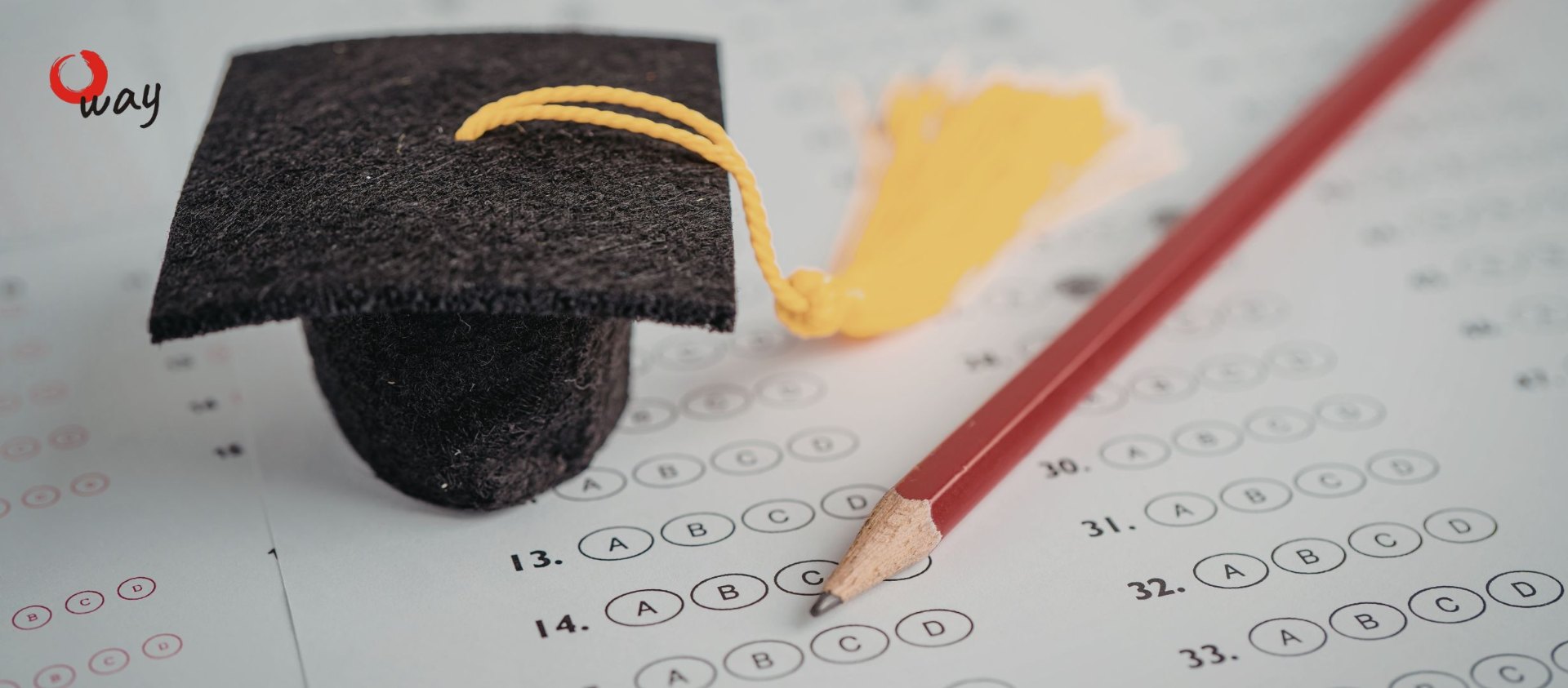
You take the mock. You check the score. You open the solution key, read through the questions you got wrong, nod at the correct answers, and close the tab feeling like you've done the responsible thing. Then the next mock comes, and the score lands in almost the same place it always does.
If this cycle sounds familiar, here's the distinction that's probably costing you: what you just did was review your mock. It wasn't analysis. They feel identical in the moment — both involve sitting with your mistakes, both take real time and effort — but they produce completely different outcomes, and only one of them actually moves your score.
Reviewing vs. Analyzing: Why the Difference Matters More Than It Sounds
Reviewing is passive. You look at a wrong answer, read why the correct option is correct, and your brain files it away as "learned." It took maybe thirty seconds. Nothing about your underlying process — how you read the question, how you eliminated options, what assumption led you astray — was ever examined. You know the right answer to that specific question now. You have not learned anything that transfers to the next, differently-worded question testing the same idea.
Analyzing is active and slower, and it asks a harder question: not "what was the right answer," but "why did I, specifically, get this wrong — and where else is that same reason going to trip me up?" That second question is the one that actually changes your preparation. It's also the one almost everyone skips, because it's more uncomfortable and takes real time that a quick glance at the solution key doesn't.
This is the single biggest reason two students can take the same ten mocks and end up in very different places. One of them was reviewing. The other was analyzing.
Why Reviewing Feels Productive But Isn't
Reviewing has a trap built into it: it feels like real work. You spent forty-five minutes going through your mistakes, so it registers as effort. But most of that time was spent confirming correct answers, not interrogating wrong instincts. A few specific ways this shows up:
You read the explanation and think "oh, that makes sense" — without asking why it didn't make sense to you thirty minutes earlier during the mock. That gap between "makes sense now" and "didn't occur to me then" is exactly where the real problem lives, and reviewing skips right past it.
You also get right answers for wrong reasons, and reviewing never catches this because it only looks at what you got wrong. A lucky elimination, a half-remembered fact that happened to be correct, a guess that landed — all of these show up as ticks on the scorecard, quietly building false confidence in a topic you don't actually have a handle on.
And because reviewing doesn't produce a written record, the specifics fade within days. You remember "I struggled with Legal Reasoning" in vague terms, but not which type of principle-application question keeps beating you. Without that specificity, the same mistake has nothing concrete to avoid, and it resurfaces two mocks later wearing slightly different words.
What Analyzing Actually Looks Like: A Four-Step Loop
Real analysis isn't a longer version of reading the solution key. It's a different activity with four distinct steps, and skipping any one of them quietly turns it back into review.
Mistakes. Identify exactly which questions you got wrong — and just as important, which ones you got right by guessing rather than reasoning through. Both are gaps, even though only one shows up as a wrong answer.
Patterns. Look at that mistake in the context of your last several mocks, not just this one. Is it a one-off, or is this the third time a similar Logical Reasoning assumption question has beaten you? A single mistake tells you little. A pattern tells you exactly where to spend your next week.
Correction. Name the actual gap behind the pattern — not "I need to study more," but something specific enough to act on: "I default to the most extreme-sounding option in assumption questions" or "I lose focus on passages after the second paragraph." A correction you can't name is a correction you can't fix.
Next action. Decide, before you close the analysis, exactly what you'll do differently in the next mock because of this. Not a vague intention — a specific, checkable change: "attempt Legal Reasoning first while my focus is sharpest" or "spend the last two minutes per passage re-reading the question stem before selecting."
Skip the loop and go straight from "wrong answer" to "correct answer," and you're back to reviewing — however long you spend doing it.
A Practical Framework for Analyzing Instead of Reviewing
Keep a written error log. This is what separates analysis from a mental note that evaporates in two days. A simple spreadsheet works: question, section, what you answered, the correct answer, why you think you got it wrong, and the one corrective action from the loop above. This single habit does more for a stuck score than any amount of additional mock-taking.
Categorize every mistake, including the lucky guesses. Not all wrong answers share a cause, and treating them the same wastes your revision time. Split them into conceptual gaps (you didn't know the rule), careless errors (you knew it but misread or mismarked), time-pressure errors (you rushed because you were behind), and guesswork (you didn't know and picked anyway, right or wrong). Each category needs a different fix.
Break the diagnosis down by section. An overall score can hide a section quietly sitting well below the rest. Look at English, Current Affairs & GK, Legal Reasoning, Logical Reasoning, and Quantitative Techniques separately — the section pulling your average down is where the next week's focus belongs.
Track time per question, not just total time. Losing time evenly across a section and losing it all in the last ten questions are different problems that need different fixes — one is a pacing issue, the other might be a specific question type you're getting stuck on.
Use a 24–48 hour re-attempt rule. A day or two later, redo only the questions you got wrong, without looking at the solutions first. Get it right this time, and it was likely a slip. Get it wrong the same way again, and that's a genuine gap the loop above needs to address — not another mock, this specific correction.
Review across mocks weekly, not mock by mock. Once a week, look at your error log across your last several mocks together. This is where real patterns surface — a specific reasoning habit that keeps recurring, or a Current Affairs blind spot that shows up in slightly different forms each time — that a single mock's review would never reveal on its own.
For Parents: A Better Question Than "What Did You Score?"
It's the natural thing to ask, but it puts the focus on the one number that says the least about whether real progress is happening. A more useful question is: "What did you fix after your last mock?" If there's a specific answer — "I realized I default to extreme options in assumption questions, so I drilled that this week" — the work is happening, even if the score hasn't caught up yet. A corrected pattern usually shows up in the score a mock or two later, not immediately, so a flat score right after a real fix isn't a sign that nothing's working.
Get a Professional Diagnostic of Your Mock Papers
Self-analysis can only take you so far when your brain is prone to justifying its own choices. If you have been stuck in the 60s for multiple consecutive mocks, a structured, external evaluation of your tests can immediately highlight blind spots.
Book a 1-on-1 Mock Diagnostic at OPUS
Bring your last two mock test papers and score breakdowns to an OPUS learning studio in Kolkata or Bangalore (or connect with our mentors online):
- Line-by-Line Error Audit: Identify whether you are losing marks to vocabulary traps, flawed elimination, or time leaks.
- Sectional Pacing Blueprint: Re-order and budget your sections based on your personal reading stamina and WPM.
- Direct Strategy Mentorship: Sit down with senior NLU alumni mentors to learn systematic argument deconstruction.
📍 Learning Studios: Kolkata (Park Street & Salt Lake) | Bangalore (Indiranagar & Koramangala)
📲 Book Your Free Mock Diagnostic Audit or visit our center between 11:00 AM and 7:00 PM.
The Takeaway
More mocks without analysis is just cardio for your ego — it feels like effort, but it isn't the specific kind of effort that moves your score. Reviewing your mistakes and analyzing them look almost identical from the outside. The difference is entirely in whether you stop at "here's the right answer" or push through to "here's why I didn't see it, and here's what changes next."
At OPUS, this mistake-pattern-correction-next action loop is built into how we structure CLAT, AILET, and SAT preparation — not as an add-on to more mocks, but as the process each mock is run through.
Reviewing means checking which answers were right or wrong and reading the correct solution. Analyzing means asking why you specifically got each one wrong, whether it's part of a recurring pattern, and deciding a specific action to change it. Reviewing takes minutes; analyzing takes real, deliberate time — and only analyzing changes your next mock's outcome.
Most likely because reviewing and analyzing were treated as the same activity. Reviewing confirms what you got wrong; it doesn't examine why, or whether it's a pattern, or what you'll specifically do differently. A stuck score despite consistent review is usually a process gap, not a knowledge gap.
Long enough to complete all four steps of the loop for your genuine mistakes and patterns — for most students that's 45 minutes to over an hour per mock, not the ten minutes a quick answer-key read takes. Depth matters more than speed here.
If you haven't been running the full mistake-pattern-correction-next action loop on your recent mocks, analyzing them properly will move your score faster than adding new mocks to a pile that was never fully processed in the first place.
A score between 60 and 70 typically indicates that while your baseline reading speed is adequate, you are losing 8 to 14 marks purely to negative marking. This happens because of intuitive guessing in 50-50 situations, skipping Quantitative Techniques, or experiencing mental fatigue during the final 45 minutes of the test.
Adopt the rule of elimination: do not search for the choice that "sounds best," but actively search for the fatal flaw in each option (e.g., extreme wording, scope shifts, or unstated assumptions). If you cannot eliminate at least two options on logical grounds, skip the question rather than taking a low-probability guess.
Yes. Completely skipping Quantitative Techniques forfeits up to 12 marks. Focusing exclusively on three core Class 8–10 arithmetic concepts—percentages, ratios, and averages—will allow you to solve at least one or two complete caselets (6 to 8 marks) in 10 to 12 minutes.
Ready to crack CLAT & AILET?
Prepare with The Opus Way's mentor-led law programme — NLU-alumni faculty, harder-than-real mocks and a personalised roadmap. Start with a free counselling session.
Start Free Trial